ACYVERSE
What if learning to trade felt like leveling up a hero?
A six-month exploration into gamified, social trading — heroes, skill trees, and mastery loops borrowed from the games people choose to spend hundreds of hours inside. Then it hit the one wall that makes fintech different from games. True concept · shelved after internal ASIC review — not shipped. Concept art below is illustrative of the design direction, not a production roster.
 ◈ LVL 1 → 2
XAU/USD 2,041.30 ▲
SKILL UNLOCKED
◈ LVL 1 → 2
XAU/USD 2,041.30 ▲
SKILL UNLOCKED
Product designer — ACYVerse (gamified social-trading exploration)
A six-month ACY exploration into heroes, skill trees, and mastery loops — shelved after internal legal review against ASIC inducement. Concept-stage; not shipped.
Modelled-vs-measured: 6 months and the V1→V2 rebuild are delivery scope. Shelved-by-review is the recorded decision. The 90-day churn figure is an industry observation used as the problem frame — not measured on ACYVerse. Concept art is illustrative. Not a live product.
The problem worth solving
Most retail traders churn within their first 90 days — not because trading is uninteresting, but because they never get fluent enough to form a strategy before the confusion wins. They quit before they learn. (Industry observation used as the problem frame — not measured on this product.)
Meanwhile, the average player will spend hundreds of hours mastering a game with a far steeper skill curve — because great games teach through a loop: a clear goal, a visible path, small wins, and a sense of becoming better.
The bet behind ACYVerse: borrow that loop. Give every new trader a hero, a skill tree, and a reason to come back and get fluent — turning the scary first 90 days into a game you actually want to master.
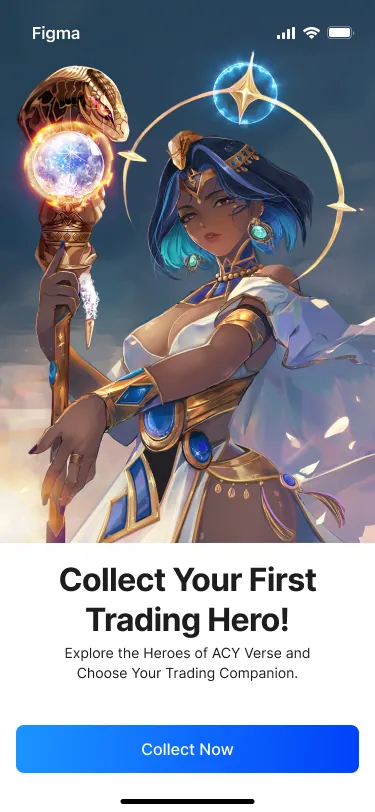





The game loop
Trade. Learn. Level up.
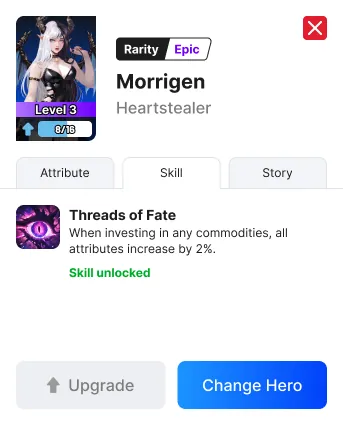
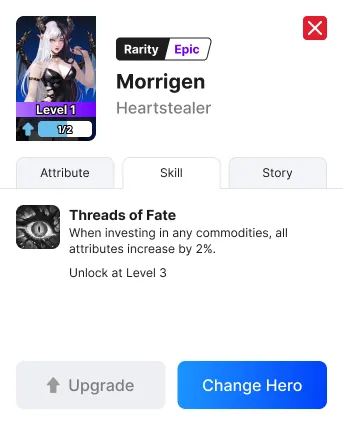
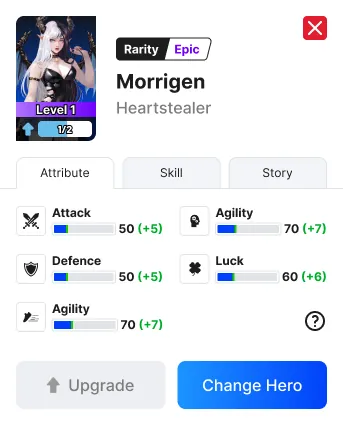
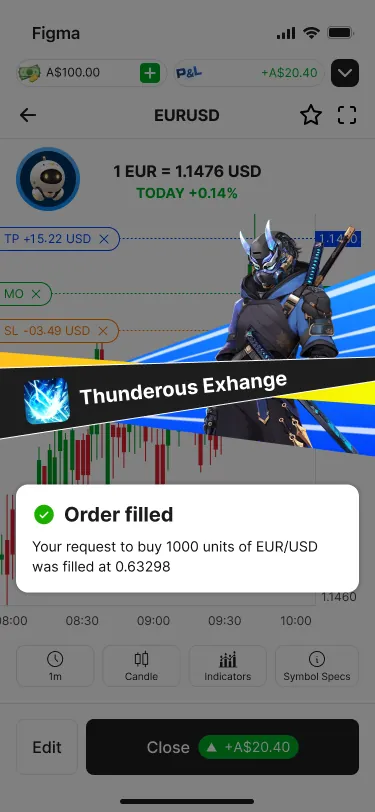
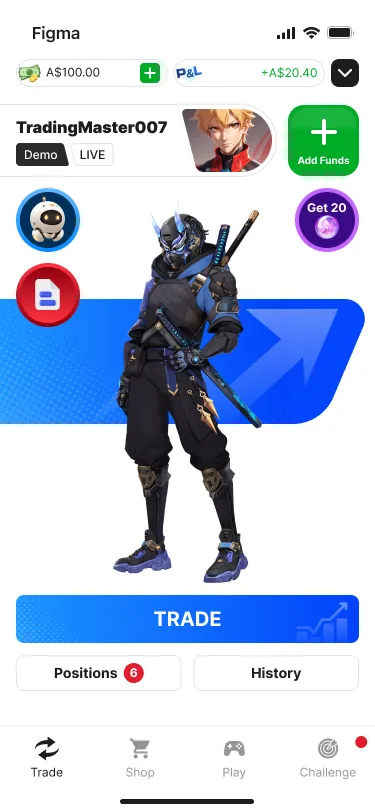
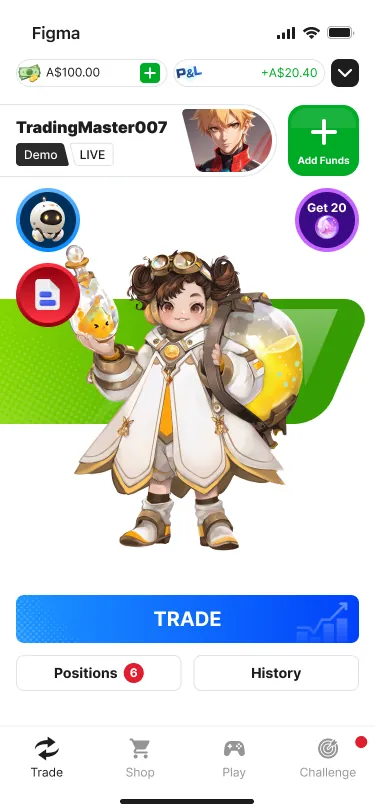
The home screen is a game lobby: your hero, your balance, your next challenge. Underneath it is a real trading account. The interactive panel below is the hero & skill screen — switch tabs to explore how progression was framed.
Skills unlock as you learn — each one gated behind a concept you can prove you understand, never behind how many trades you place.

The part games skip
Character creation, meet KYC.
The most delightful moment in a game is building your character. The least delightful moment in finance is identity verification. ACYVerse's onboarding job was to make them the same moment — carrying real AML/KYC (biometrics, ID, proof of address, even crypto-wallet source-of-funds proof) inside the feel of an origin story, so new traders finish verification instead of abandoning it.

Step 01Enter the Verse
A game-lobby welcome — not a sign-up wall.
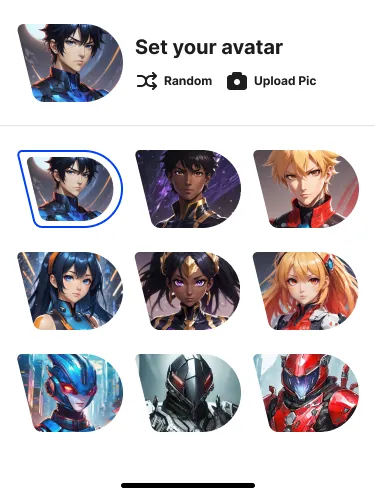
Step 02Create your identity
Character creation that doubles as profile setup.
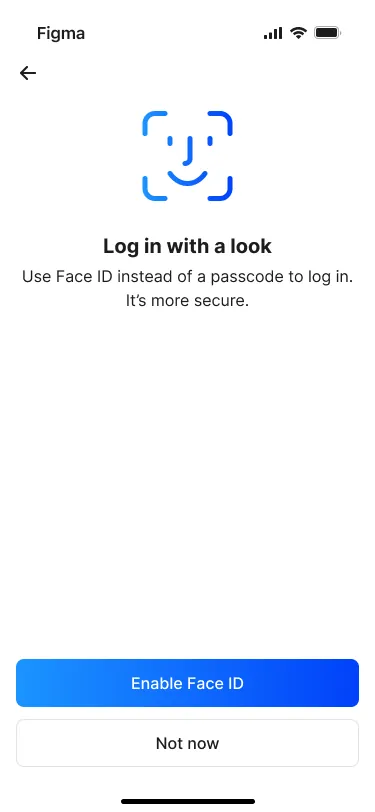
Step 03Biometric lock
Face ID framed as unlocking your account.
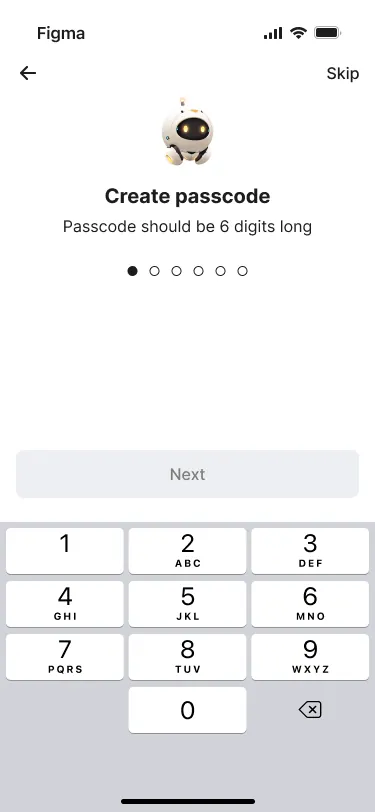
Step 04Set a passcode
A second factor, in two taps.
Step 05Verify identity
Veriff-powered KYC — the regulated core, made calm.
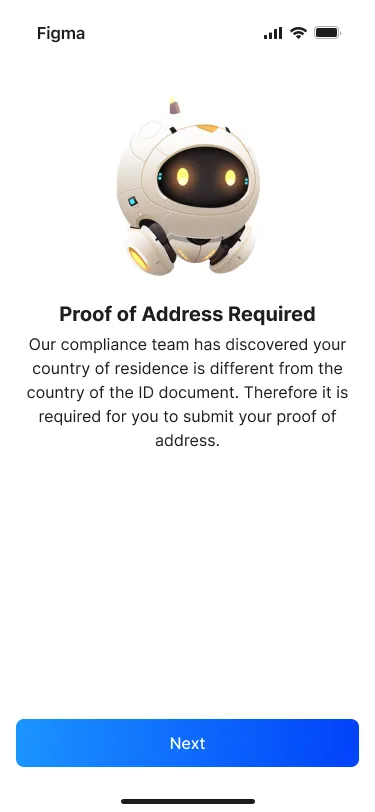
Step 06Proof of address
Document upload without the dread.
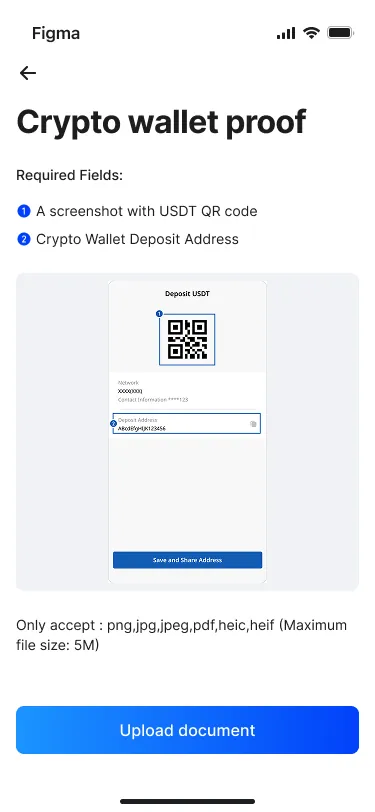
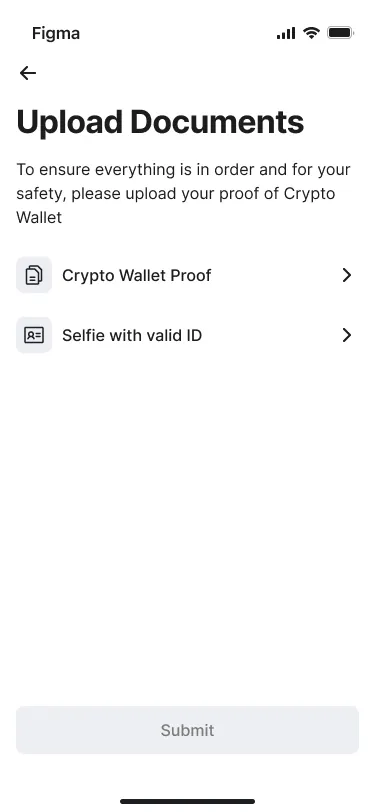
Step 07Crypto wallet proof
Source-of-funds verification for crypto deposits.
← scroll the full flow →
Underneath the fantasy
A real order engine.
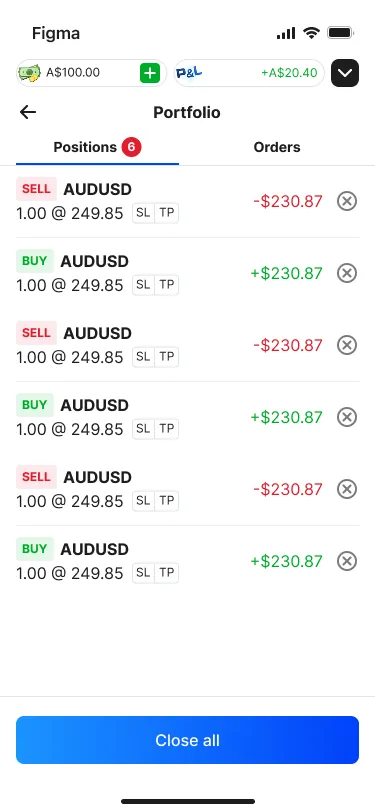
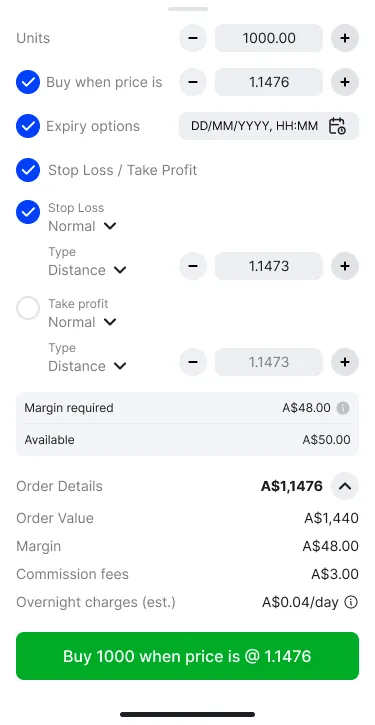
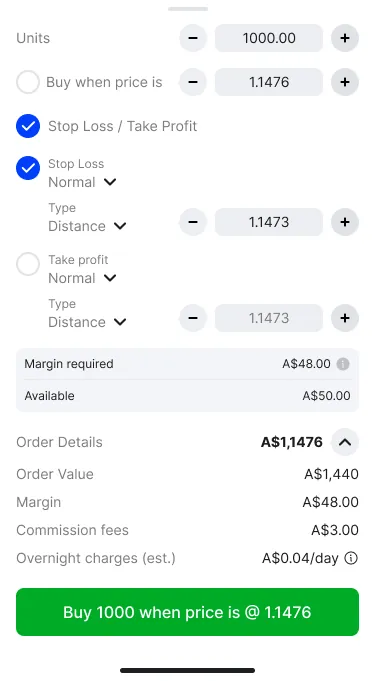
Strip away the heroes and there's a genuine trading surface — order entry with real order types, live positions, and one-tap risk controls. A game can be forgiving; an order ticket cannot. Beneath the skin, every trading interaction had to be as exact as any institutional terminal — the fun could never come at the cost of a mis-priced fill.
The turn
Then legal review changed everything.
Where a game becomes a regulatory problem.
Games reward activity — more play is the goal. But under ASIC's inducement rules, a financial product may not encourage trading activity. An achievement for “completing 100 trades,” particle effects that celebrate every execution, a virtual currency layered over real money — the exact mechanics that make games sticky are, in a regulated broker, close to unlawful encouragement.
The internal review didn't just flag a screen. It reframed the whole project: every fun mechanic had to be re-examined for whether it educated or merely induced.
It looked like a casino
- Achievement unlocks tied to trading activity — "place 100 trades"
- Particle effects & level-up celebrations on every execution
- A virtual-currency overlay on top of real money
- Reads and feels like reward-for-volume — ASIC inducement risk
Reward understanding, not activity
- Progression gated behind concepts learned, never trades placed
- Gamification as accent, not theme — a clean interface underneath
- Social features share strategy frameworks & analysis — never trade signals
- Celebrations mark learning milestones, not order fills
The transferable output
Engagement vs. inducement.
The real deliverable wasn't a shipped feature — it was a test I could apply to any engagement mechanic, in any regulated product. One question decides which side of the line a design falls on.
Rewards understanding
Celebrates a concept learned, a plan formed, a risk understood. Makes the user better and safer. Survives an audit against regulatory intent, not just its letter.
Rewards activity
Celebrates volume, frequency, or size. Makes the broker better and the user busier. Obscures risk behind a dopamine loop. Fails the moment you ask what behaviour it actually encourages.
“If this mechanic works perfectly, does the user end up more capable — or just more active?” Design for the first. In regulated finance, that distinction is the whole job.
Outcome
Shelved by design — not by failure.
ACYVerse never launched. The review caught the risk early enough to prevent any external exposure — which is the review working, not the design failing. And its real output outlived it: the engagement-vs-inducement framework carried forward into later ACY product work, including how onboarding gamification was evaluated in LogixTrader.
In regulated finance, every engagement mechanic carries a moral dimension — and knowing when not to ship is a design skill.
Ed Chen · Senior Product Designer