Interactive Prototypes:
Design-to-Code Pipeline
To bridge the gap between design intent and engineering implementation, I prototype key interactions in code before Figma handoff. This practice validates technical feasibility early, provides engineers with reference implementations, and reduces ambiguity in animation timing, easing curves, and responsive behavior.
Why I Prototype in Code
Static Figma mockups can't convey timing, easing curves, or interaction nuance. By prototyping in CodePen/HTML/CSS/JS, I:
- Validate feasibility before engineering handoff (no "impossible to implement" surprises)
- Communicate intent through working code, not just specs
- Accelerate development by providing reference implementations engineers can fork
- Catch edge cases early (responsive breakpoints, animation performance, browser compatibility)
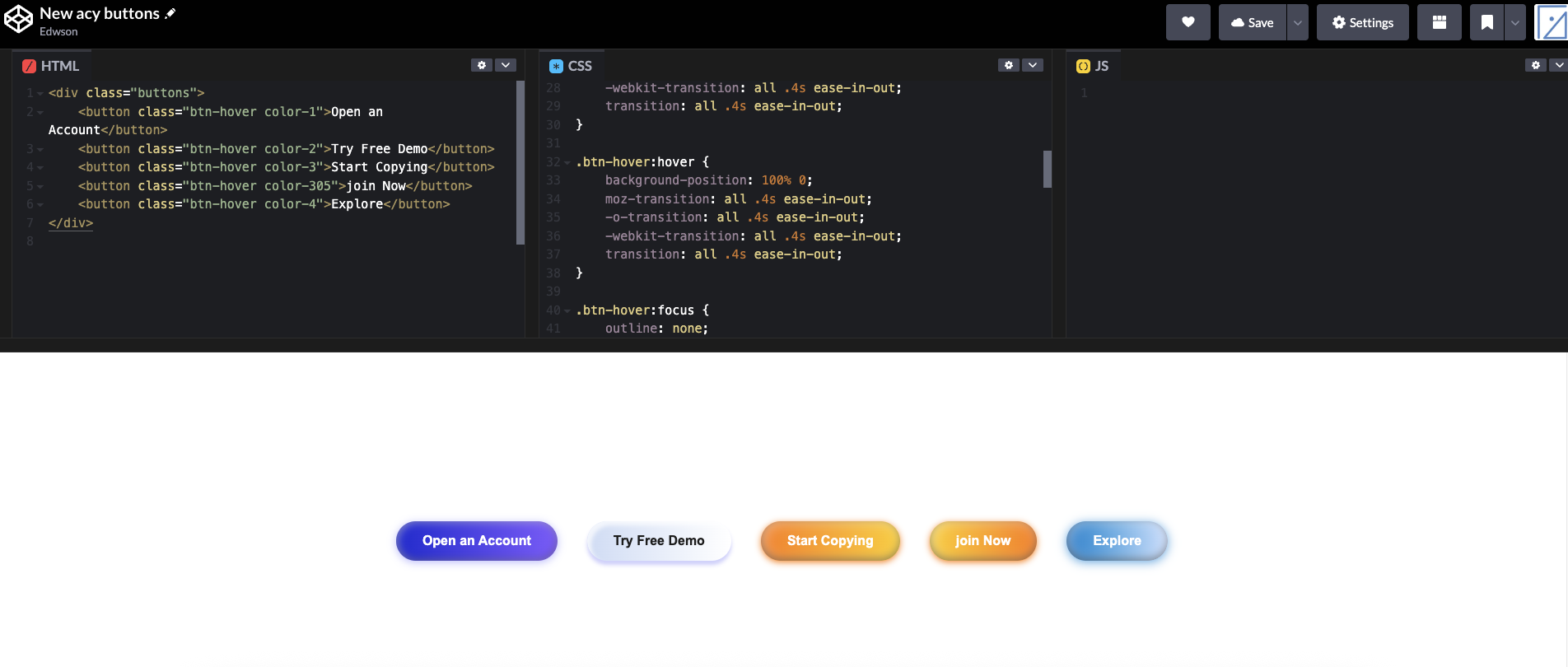
ACY Button System — Gradient Hover Animations
Production code for ACY Securities' primary CTA system. Gradient hover effects with cross-browser compatibility (.4s ease-in-out transitions, -webkit/-moz prefixes).
.btn-hover:hover {
  background-position: 100% 0;
  -webkit-transition: all .4s ease-in-out;
  -moz-transition: all .4s ease-in-out;
  transition: all .4s ease-in-out;
}
Code Quality Highlights
- Cross-browser compatibility: -webkit, -moz, standard CSS
- Performance-conscious: GPU-accelerated transforms, optimized transitions
- Semantic HTML: Proper button elements, accessible markup
- Maintainable CSS: Consistent naming (btn-hover, color-1/2/3/4/305)
- Engineers referenced these prototypes during ACY.com rebuild
- Reduced design clarification cycles during handoff — engineers modified reference implementations rather than interpreting static specs
- Gradient hover pattern became standard across 5 platforms (acy.com, finlogix.com, tradingcup.com, acyconnect.com, ACY Mobile App)
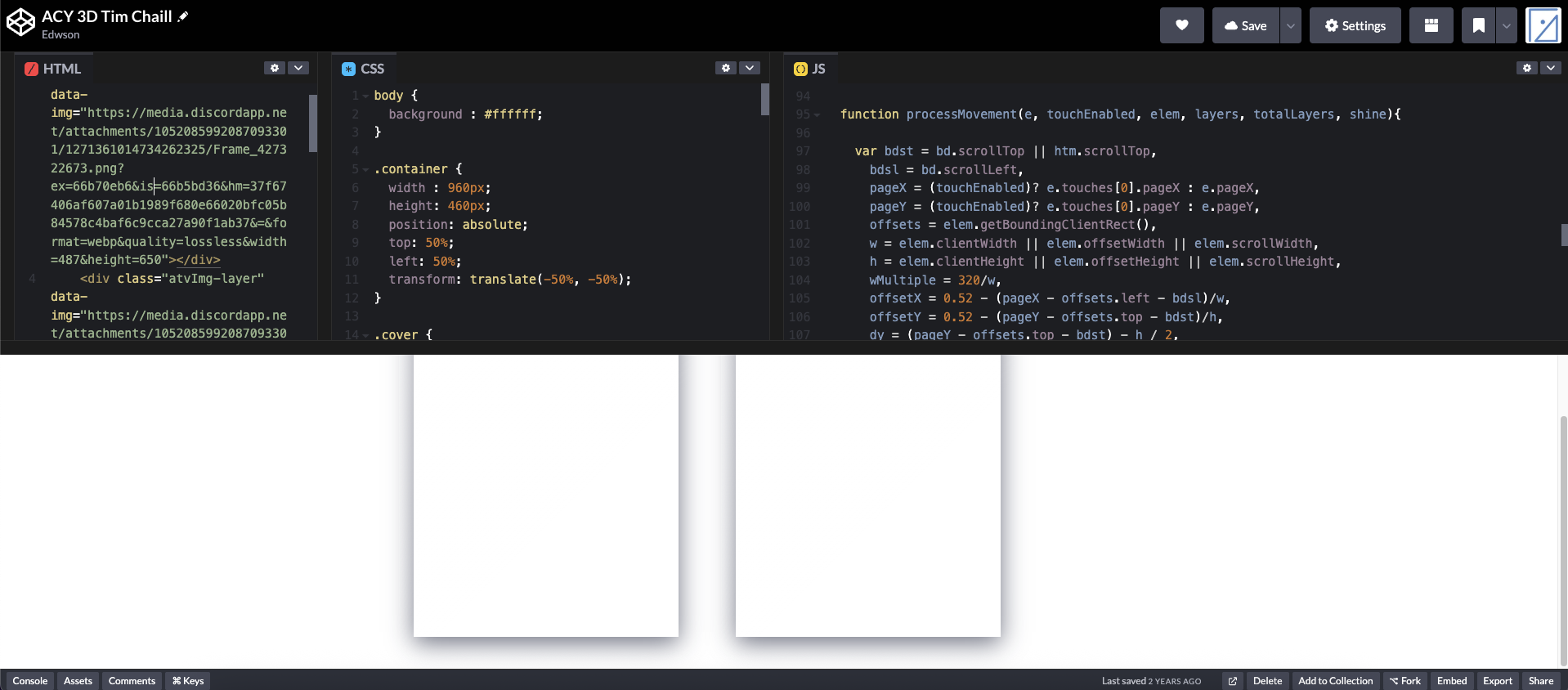
ACY 3D Interactive Visualization
Complex 3D interactive experience built with vanilla JavaScript. Demonstrates advanced DOM manipulation, touch gesture handling, and performance optimization for smooth 60fps animations.
Technical Implementation
- Touch & Scroll Integration: Multi-touch gesture support with momentum scrolling
- Performance Optimization: RequestAnimationFrame for smooth 60fps rendering
- 3D Transform Matrix: Hardware-accelerated CSS transforms for fluid motion
- Responsive Layout: Adaptive positioning (absolute, transform: translate)
Private Banking Relevance
Complex interactive visualizations demonstrate capability to prototype sophisticated financial data experiences (portfolio 3D visualization, market relationship graphs) that UHNW clients expect from premium digital platforms.
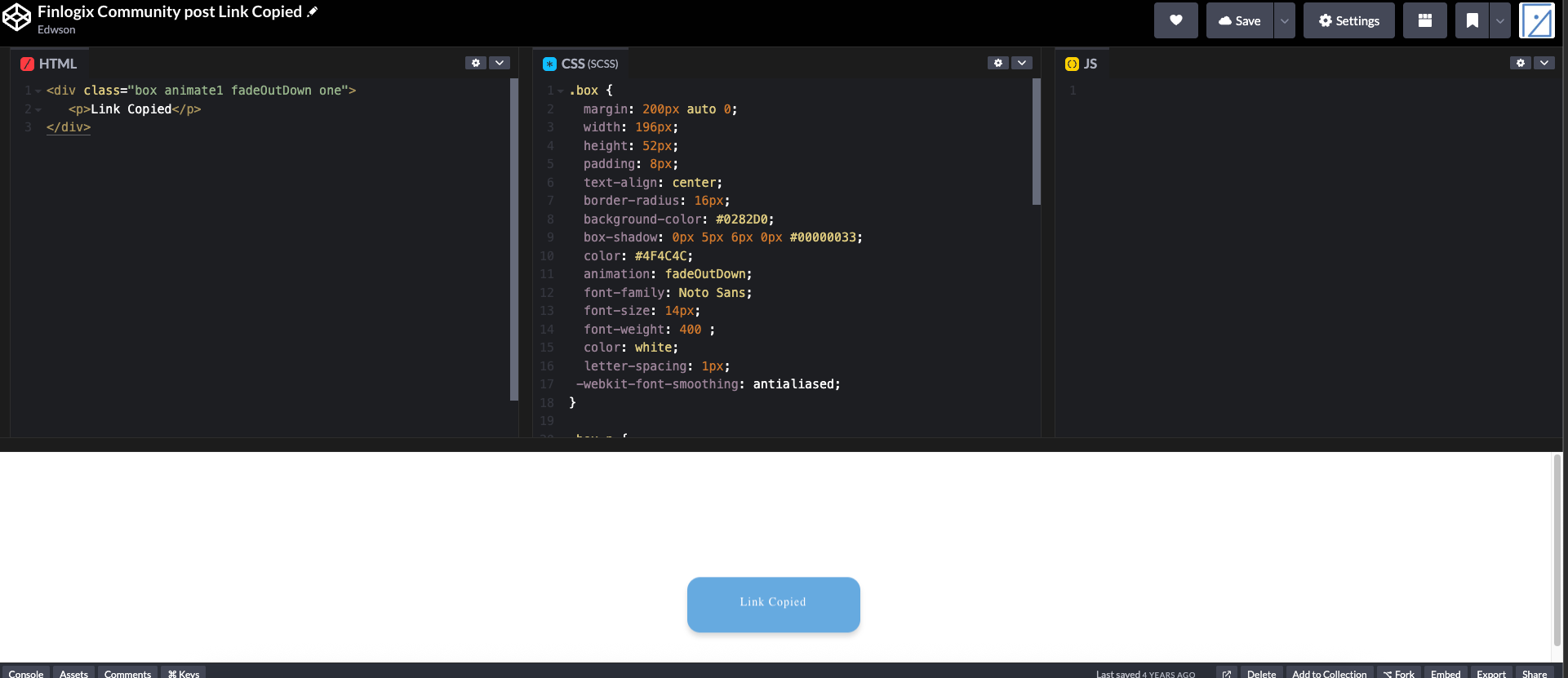
Finlogix Community — Link Copied Micro-interaction
Polished feedback animation for copy-to-clipboard action. Shows attention to micro-interactions that elevate perceived product quality and provide clear user feedback.
.box {
  animation: fadeOutDown 2s ease-in-out;
  text-align: center;
  border-radius: 16px;
  box-shadow: 0px 5px 6px 0px #00000033;
}

@keyframes fadeOutDown {
  0% { opacity: 1; transform: translateY(0); }
  100% { opacity: 0; transform: translateY(20px); }
}
Design Attention to Detail
- User Feedback: Clear confirmation of successful action (copy)
- Timing: 2s duration balances visibility with non-intrusiveness
- Easing: ease-in-out creates natural, polished feel
- Visual Polish: Box-shadow adds depth, border-radius softens edges
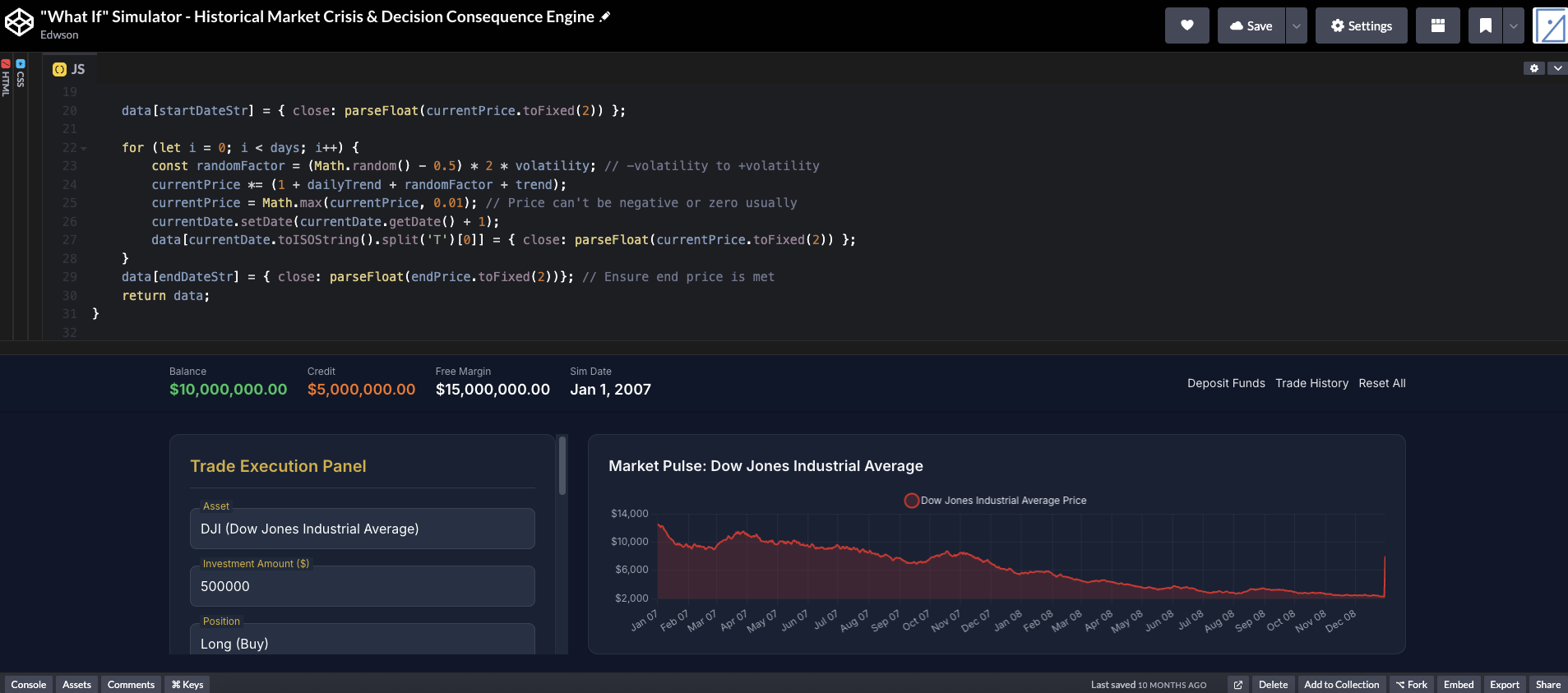
"What If" Historical Financial Simulator
Interactive tool for backtesting trading strategies against historical market data. Demonstrates understanding of financial data visualization and real-time calculation interfaces.
Technical Implementation
- Real-time calculations: Event-driven architecture for instant feedback
- Data visualization: Custom chart components using Canvas API
- Financial accuracy: Precise number handling for dollar amounts and percentages
- Responsive design: Mobile-first approach for on-the-go analysis
Private Banking Relevance
Demonstrates capability to prototype interactive financial logic (scenario analysis, historical market simulation) — the type of calculation-driven tooling that institutional wealth management platforms require. Fluency with financial concepts beyond surface UI.
Live Interactive Demos
Beyond CodePen components — full working prototypes that run in your browser. Built using the same libraries used in production fintech platforms (TradingView, D3.js, React) to prove the design decisions are technically sound, not just visually compelling.
Open Source Study — Staying Sharp on Fintech Stack
These are open source projects I've studied, forked, and prototype against to stay current on the technical capabilities that matter for institutional fintech design. Understanding what the engineering stack can do changes how I design — knowing a chart library has an order book plugin means I can design with it, not around it.
Industry-standard HTML5 financial charting library — same engine used by TradingView's 50M+ users. I've studied all 20+ plugin examples including heatmap series, volume profiles, Bollinger Bands, and custom tooltip primitives. Powers the Live Terminal Demo, the Finlogix chart embed, and the EMA crossover signal marker overlay on the Finlogix case study.
Decoder-only transformer for OHLCV candlestick forecasting — trained on 45+ global exchanges. I studied its WebUI (Plotly.js Flask), tokenizer architecture, and how it presents forecast uncertainty to non-ML users. The AI Signals tab in the Terminal Demo is directly inspired by Kronos' prediction output format.
AI agent-native trading platform — agents collaborate, share signals, and copy top performers. I analyzed its multi-page React architecture (TradePage, PositionsPage, StrategiesPage, CopyTradingPage, LeaderboardPage) and how it handles real-time paper trading with Polymarket data. Informed the Positions and Signals UX in the Terminal Demo.
Vue 3 + D3.js swarm simulation where thousands of AI agents interact to forecast outcomes. I studied its multi-agent orchestration logic and used it as the basis for the live Multi-Agent Signal Consensus panel on the Hedge Fund Portfolio Management case study — six independent model agents voting on direction, with a weighted ensemble result updating in real time.
Impact on ACY Securities Design System
These CodePen prototypes served as the reference implementation for ACY's component library, which scaled across:
- acy.com (Awwwards-nominated homepage)
- finlogix.com (trading analytics platform)
- tradingcup.com (social trading)
- acyconnect.com (institutional B2B)
- ACY Mobile App (iOS/Android, 100K+ downloads)
Outcome: Code prototypes served as reference implementations across all 5 platforms during ACY's design system buildout. Engineering used them directly during the ACY.com rebuild, reducing back-and-forth during handoff. The component pattern library supported multiple concurrent campaign launches across product lines.
Why Code Prototyping Matters for Institutional Finance Roles
Private bank digital platforms integrate with Bloomberg Terminal, Aladdin portfolio management, and proprietary trading systems. Designers who understand technical constraints can:
- Prototype realistic solutions (not fantasy mockups that can't be implemented)
- Communicate effectively with quantitative developers (speak their language through code)
- Anticipate integration challenges early in design process (before engineering handoff)
- Rapid-prototype financial calculators for UHNW clients (wealth projection, portfolio scenario analysis)
Competitive Advantage: Most product designers design in Figma and hand off to engineers. I design in Figma, prototype in code (validate feasibility), ship production code (WordPress, React Native), and hand off reference implementations — which means faster time-to-market and fewer implementation surprises.
Note on Prototype Access
Many of my CodePen prototypes contain proprietary animation patterns and brand-specific implementations for ACY Securities that I cannot publicly share due to NDA. However, I'm happy to walk through the code logic during interviews or create genericized versions for review. Screenshots shown here preserve the technical approach while protecting proprietary design patterns.