
ペットと、どこへでも。
The trust layer for
pet-friendly Japan.
A two-sided marketplace that tells pet owners which places will actually welcome their dog — and connects them to verified emergency sitters when plans fall apart. Founded, designed, and built solo, from Tokyo field research across 2024–2025 to a live MVP in seven months.
The problem
In Japan, 15.9 million pets now outnumber children — yet no one can tell you, with certainty, which café will actually let your dog inside.
The spark
at Computex.
I met Kenta Uehira, a Japanese VC, on a conference floor in Taipei. We talked about pet culture and the friction of being a pet owner in a city that wasn't built for your dog. Then he said something that stopped me cold.
So I started learning Japanese — with intention. I flew back. I sat with pet owners in Yoyogi Park, with sitters, with vet clinic staff. I was the user; the problem had happened to me. On May 27, 2025 I opened Figma and started building. Seven months later, the MVP went live.
「福岡で必ず
火がつく」 "This will definitely catch fire in Fukuoka." — Kenta Uehira · VC, Japan · Computex Taipei
上平さん、お世話になっております。Ed Chen です。
以前、PawsRoam について「福岡で必ず火がつく」とおっしゃっていただいたこと、とても励みになっております。
過去 7ヶ月間、製品開発に集中してきました。アプリはほぼ完成し、いよいよ市場への展開を開始する段階に来ました。
福岡での市場参入戦略について、ぜひ一度お時間をいただけないでしょうか。
Ed Chen — PawsRoam Founder
A ¥50 trillion category,
still run on word of mouth.
Three frictions,
heard in every interview.
Twenty-plus conversations across Shimokitazawa, Nakameguro, Shibuya, and Yoyogi. Owners, sitters, café staff, vet receptionists — all described the same friction from different vantage points. That convergence, not volume, is what justified building.
Information chaos
Maps label venues "pet-friendly" with no policy depth — weight limits, leash rules, breed restrictions. Every owner had been turned away somewhere the internet said was welcoming.
The emergency void
A venue refusal mid-trip, a sudden work shift, a medical crisis — and no on-demand network for same-day trusted care. Existing sitter apps need 24–48h notice.
Eroded trust
Search is dominated by paid placement. Owners had learned to distrust it entirely, reverting to LINE groups. Community-validated data beat platform-published data, every time.
A map you can trust,
and a net for when plans break.
PawStar™
Non-purchasable, Michelin-style validation. Venues earn 1–3 PawStars from verified community nominations and policy consistency — earned reputation that cannot be bought.
PawsSafe™
An on-demand SOS layer connecting owners to certified sitters and pet-friendly crisis accommodation — vetted through a six-tier protocol, not a gig-economy sign-up.
Ecosystem
PawsConnect forums for local knowledge, and a PawsCoupon merchant portal that bridges verified pet businesses with high-intent owners — the B2B side of the marketplace.
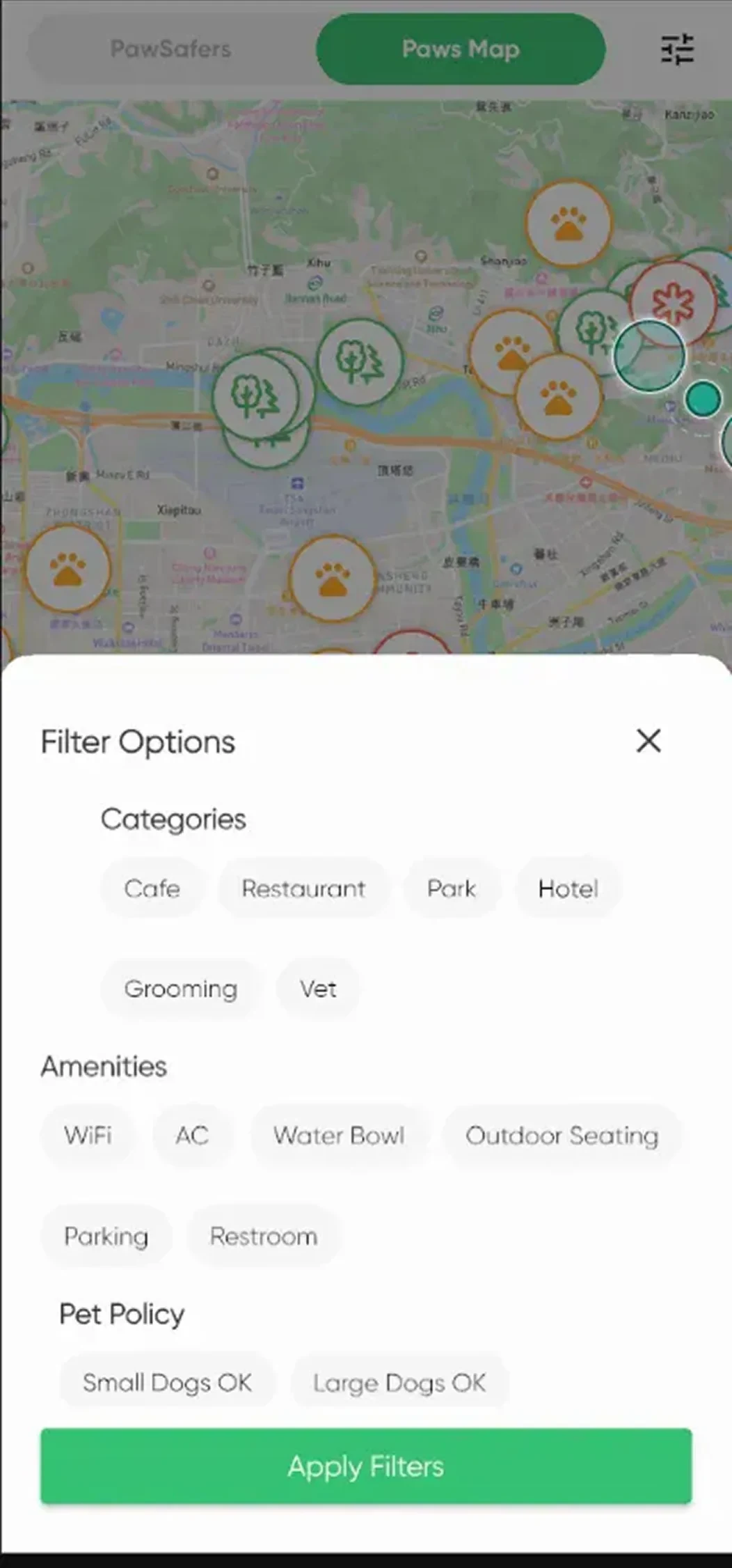
Map-centric, not list-first
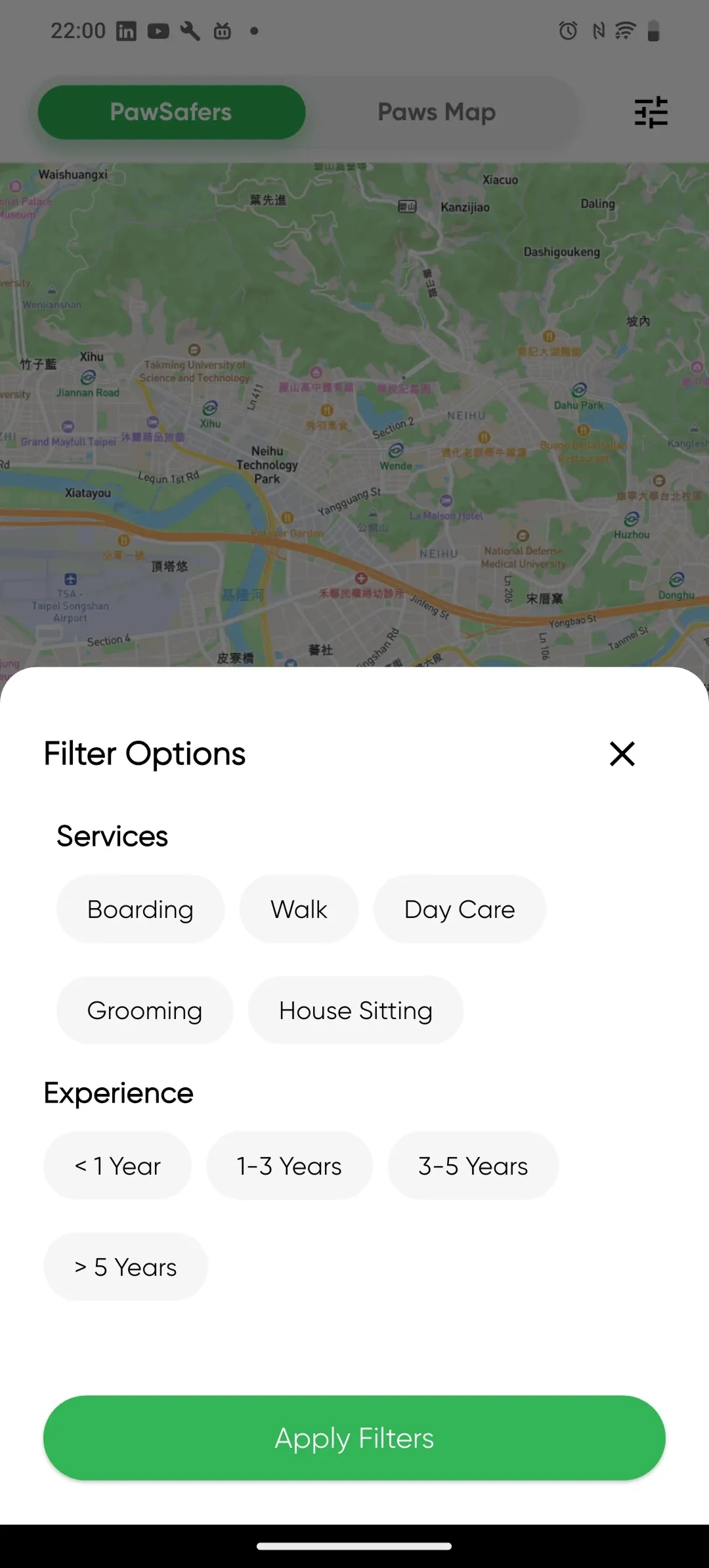
Built on React Native + Google Maps. A three-tier marker system — nominated, PawStar-certified, PawsSafe provider — makes trust legible at a glance, the moment you open the app.
Policy depth on every pin
Weight limits, leash rules, indoor/outdoor, amenities — the structured detail that decides whether you're welcomed or turned away. The gap between declared and actual access, closed.
A profile that knows your pet
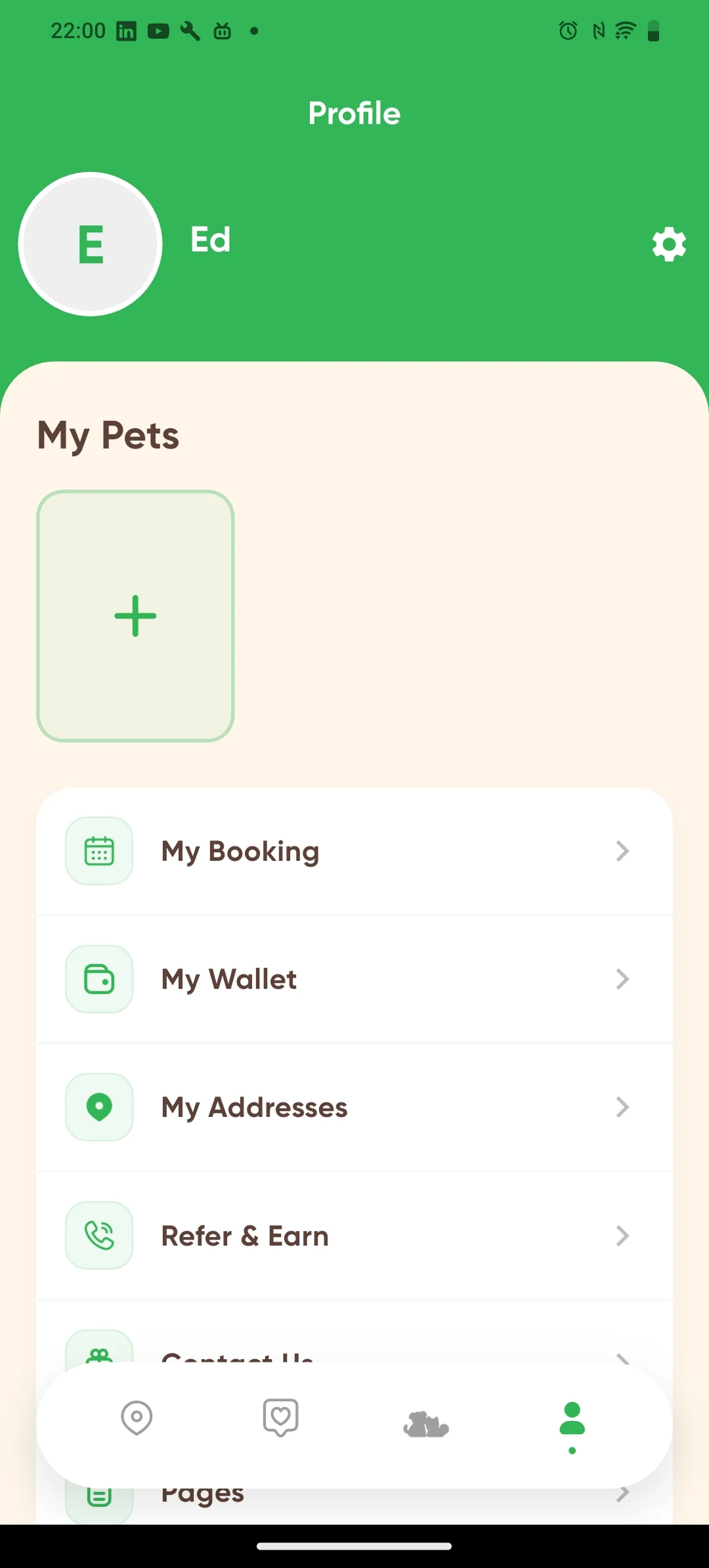
Vaccination records, allergens, behavior and sociability — a high-fidelity data layer so PawsSafe matches on medical accuracy and temperament, not just availability.
A net for emergencies
The PawsSafe SOS layer connects owners to certified sitters and crisis accommodation when plans break — same-day, vetted, and matched on the pet's real needs, not just availability.
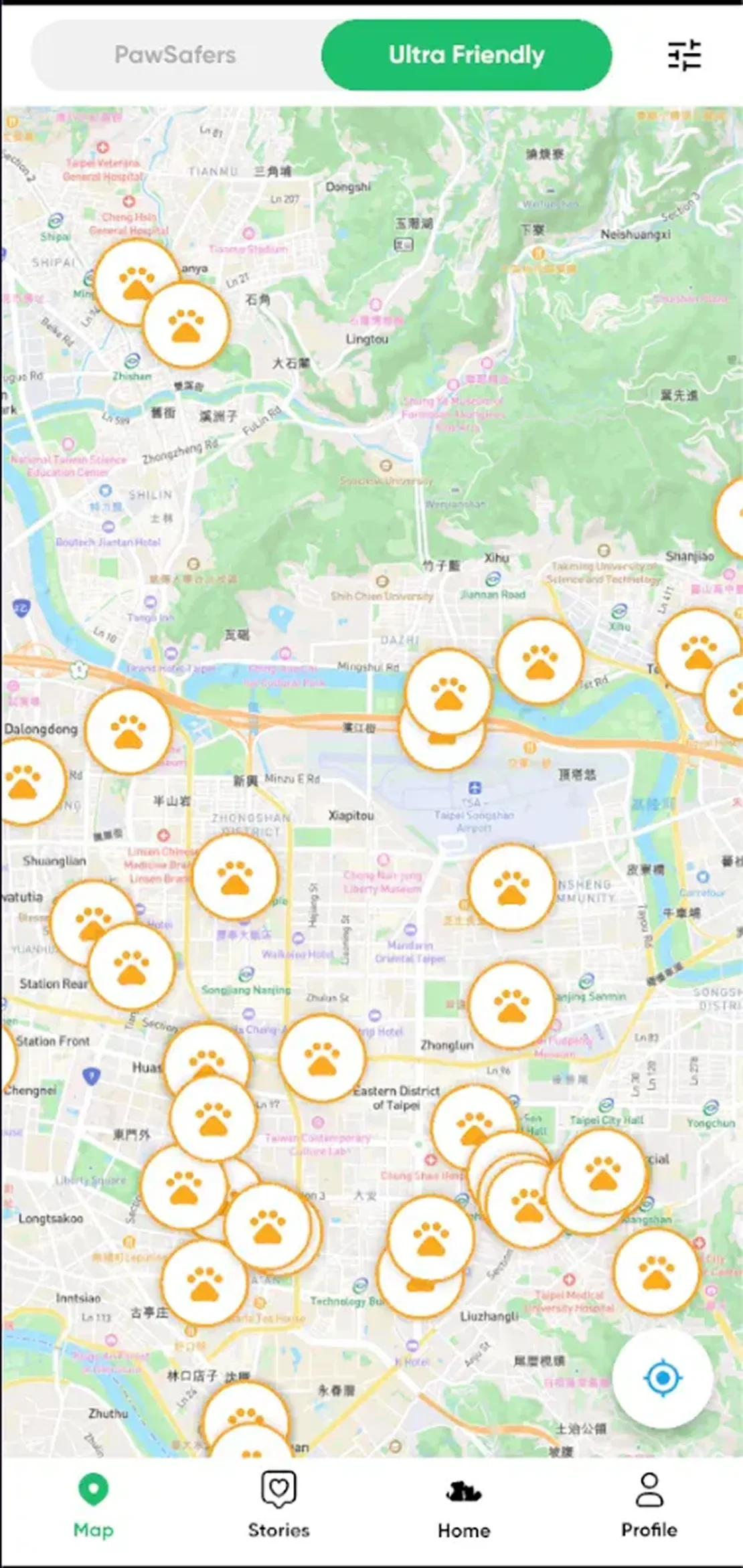
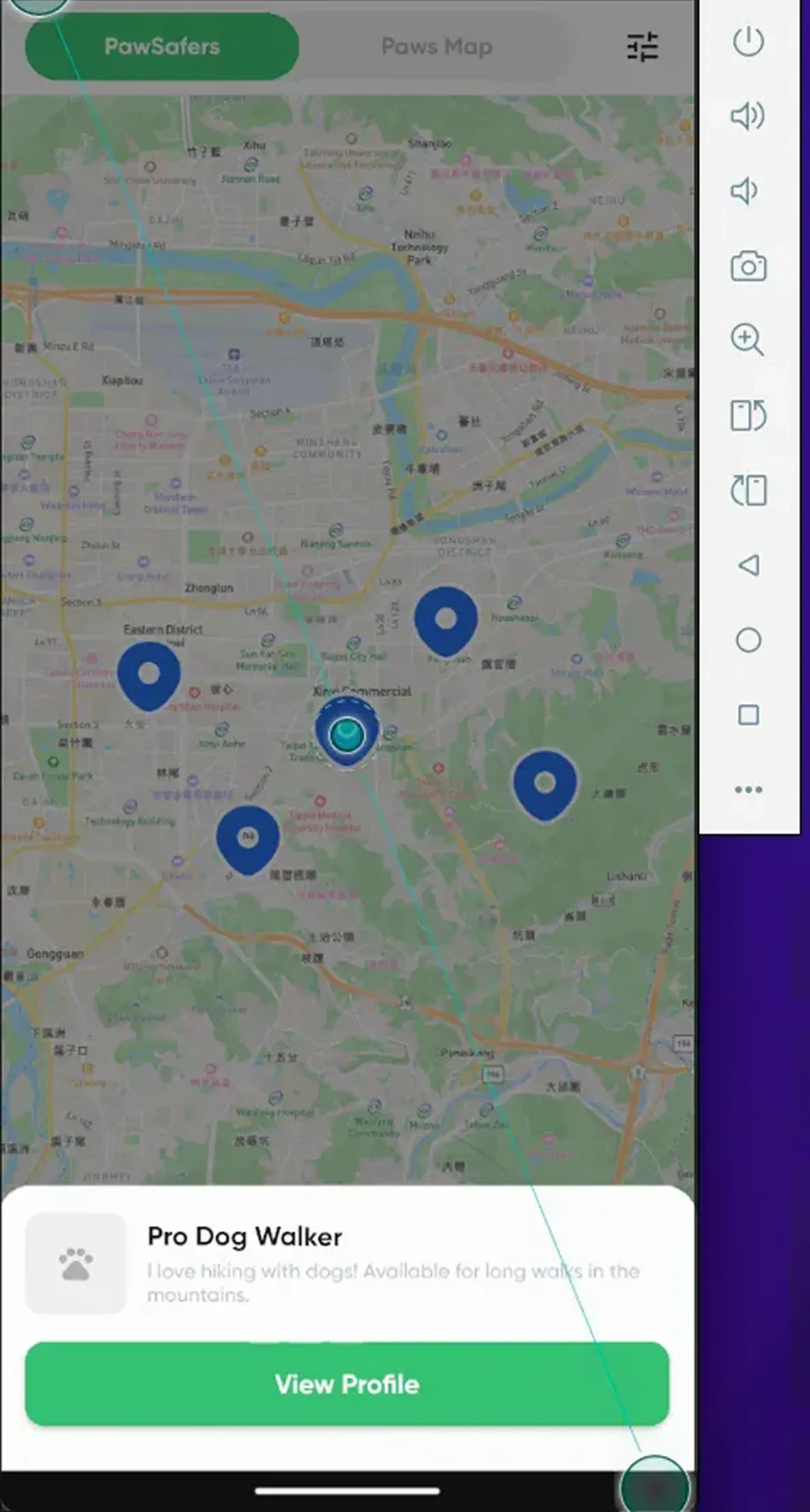
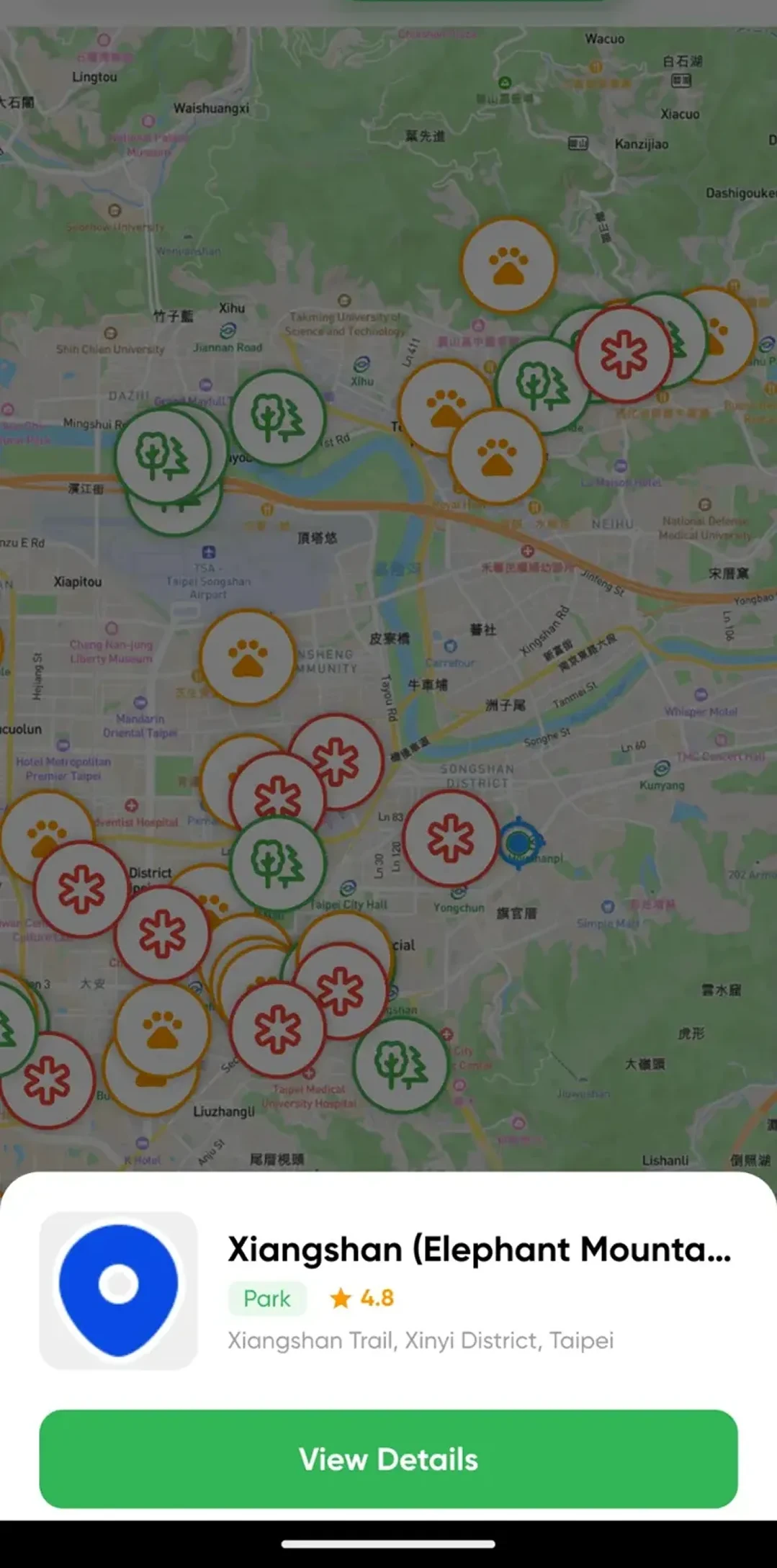
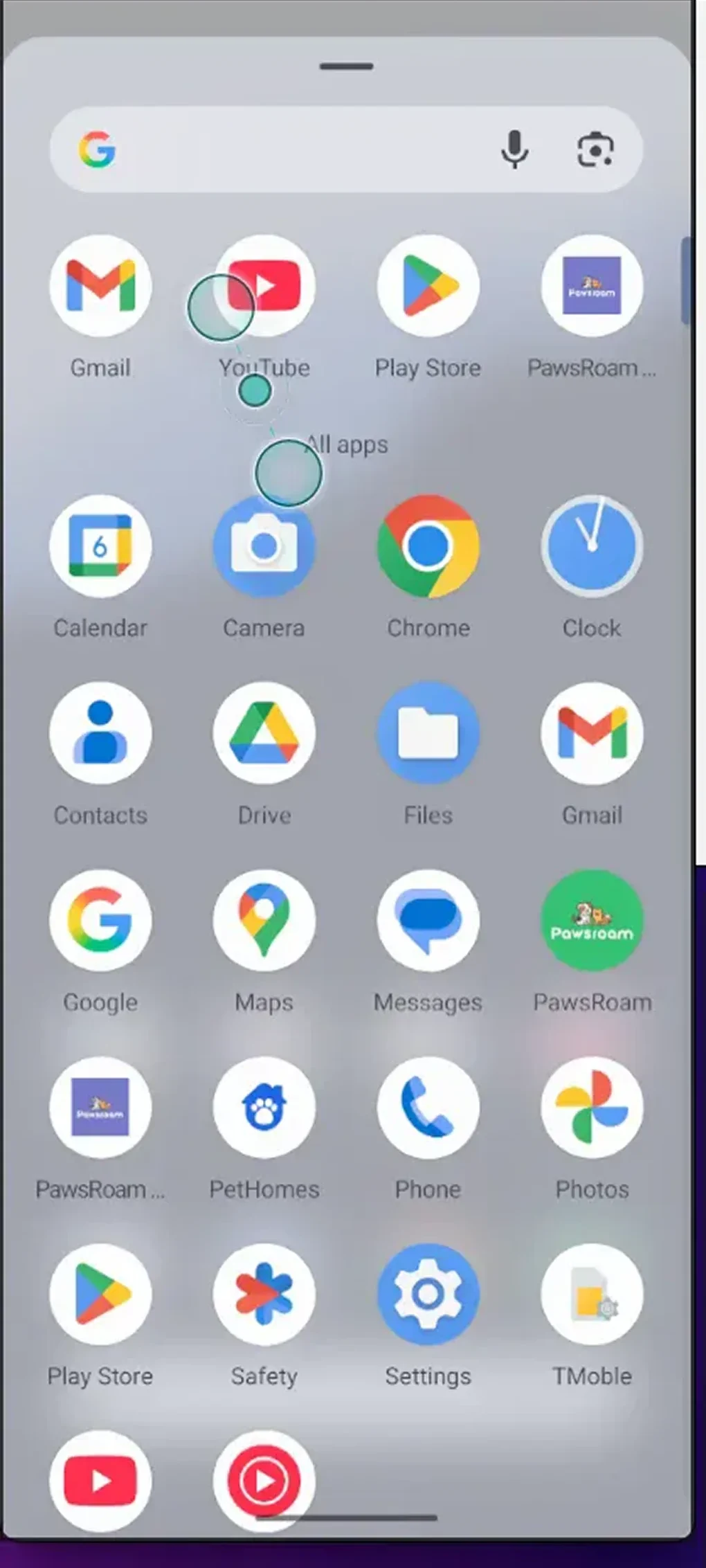
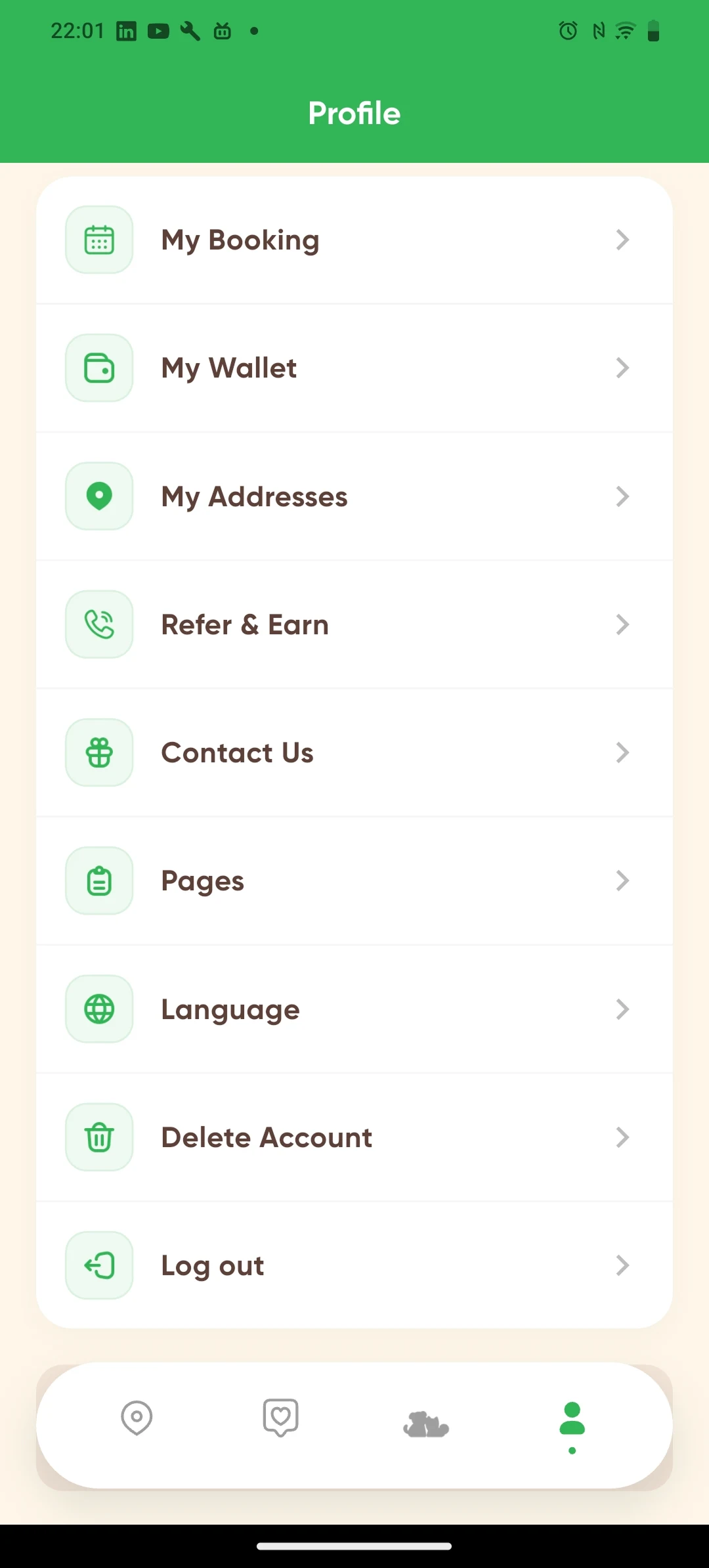
PawsRoam for iOS & Android — React Native. Eight of the live MVP screens.
On the ground
in Tokyo.
Before a line of production code: pet cafés as a customer, vet clinics on intake friction, dog-owner communities in the park. The features exist because field research and competitor teardowns agreed — these were structural problems, not UI problems.
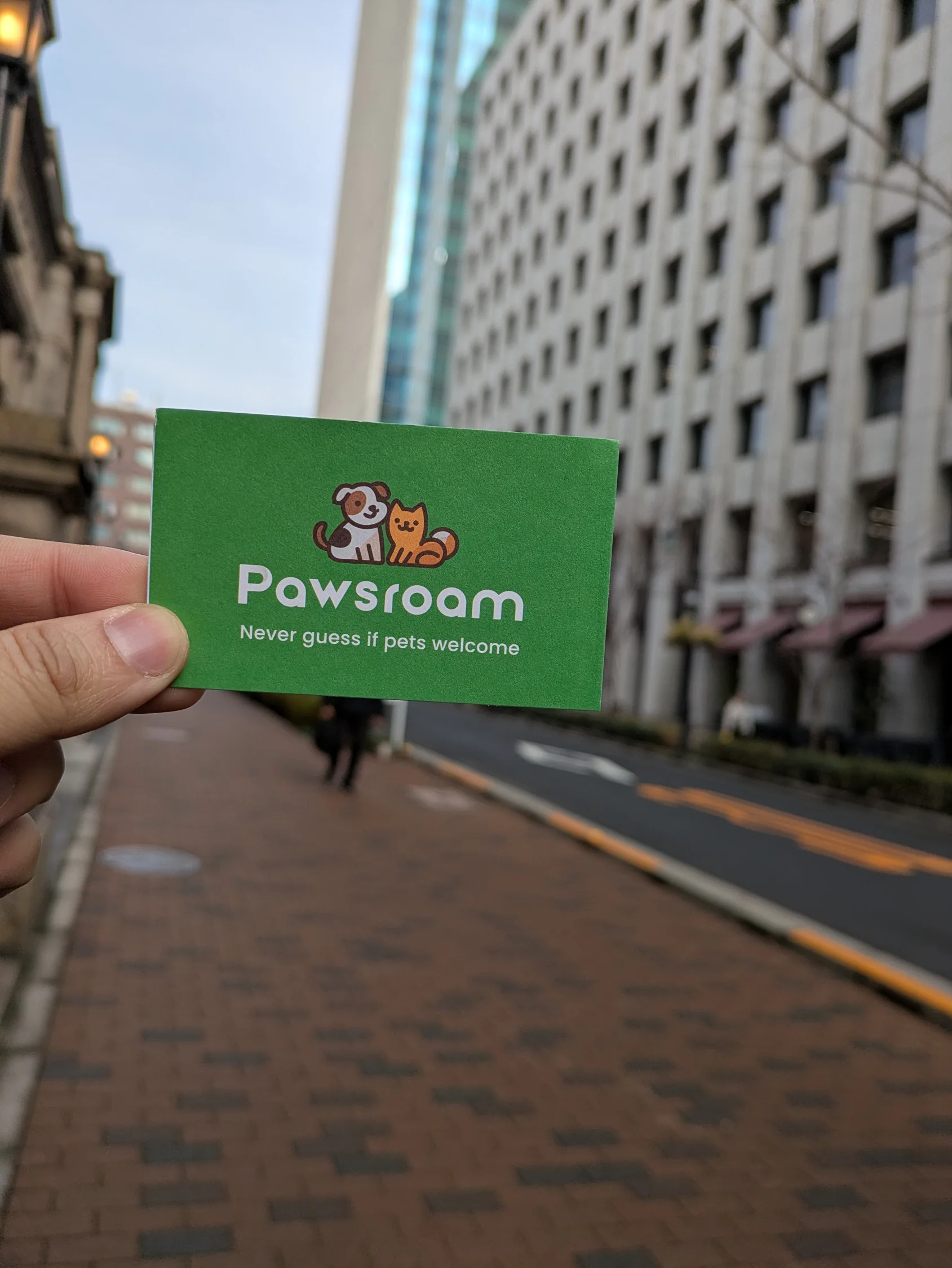
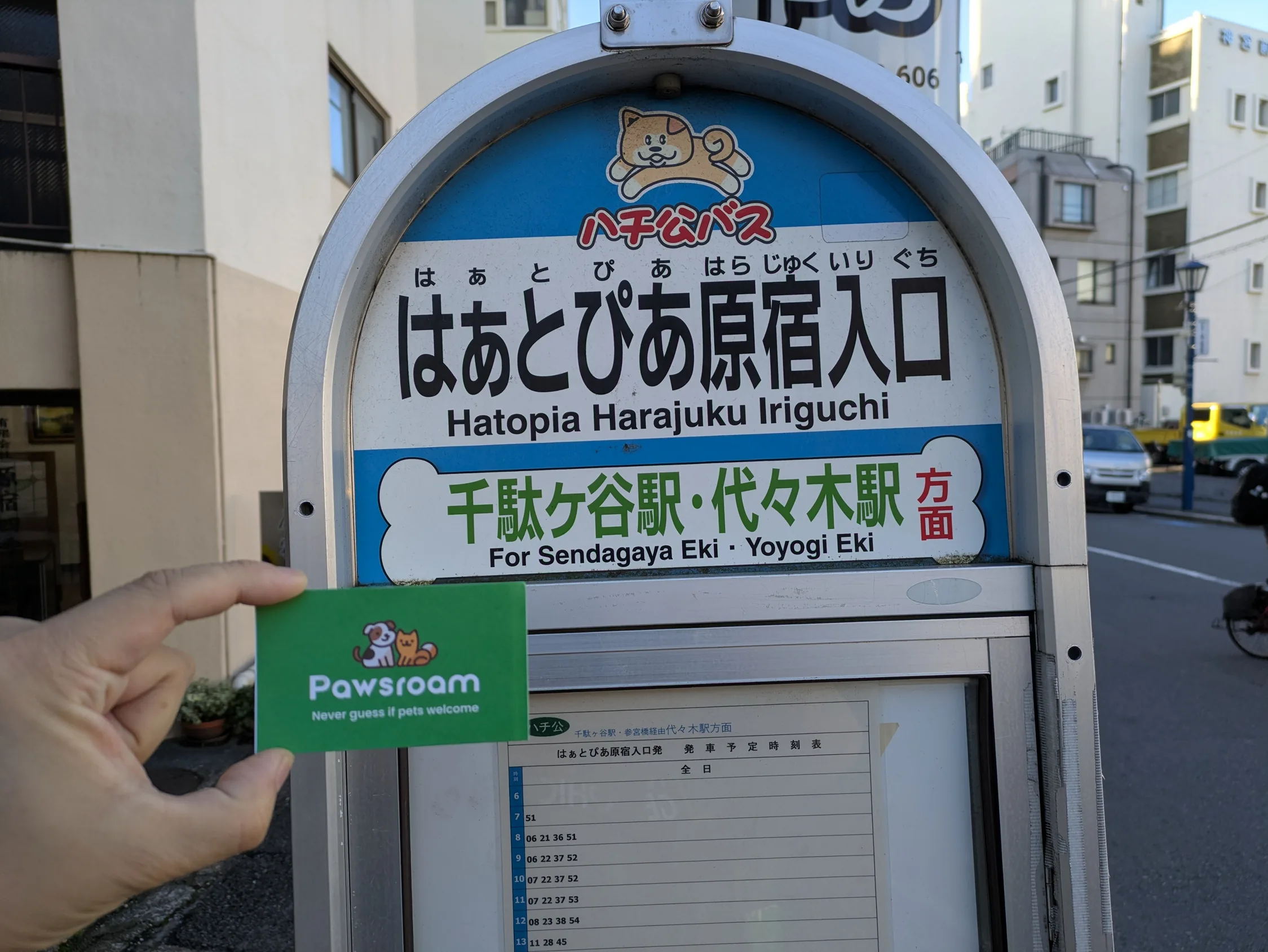
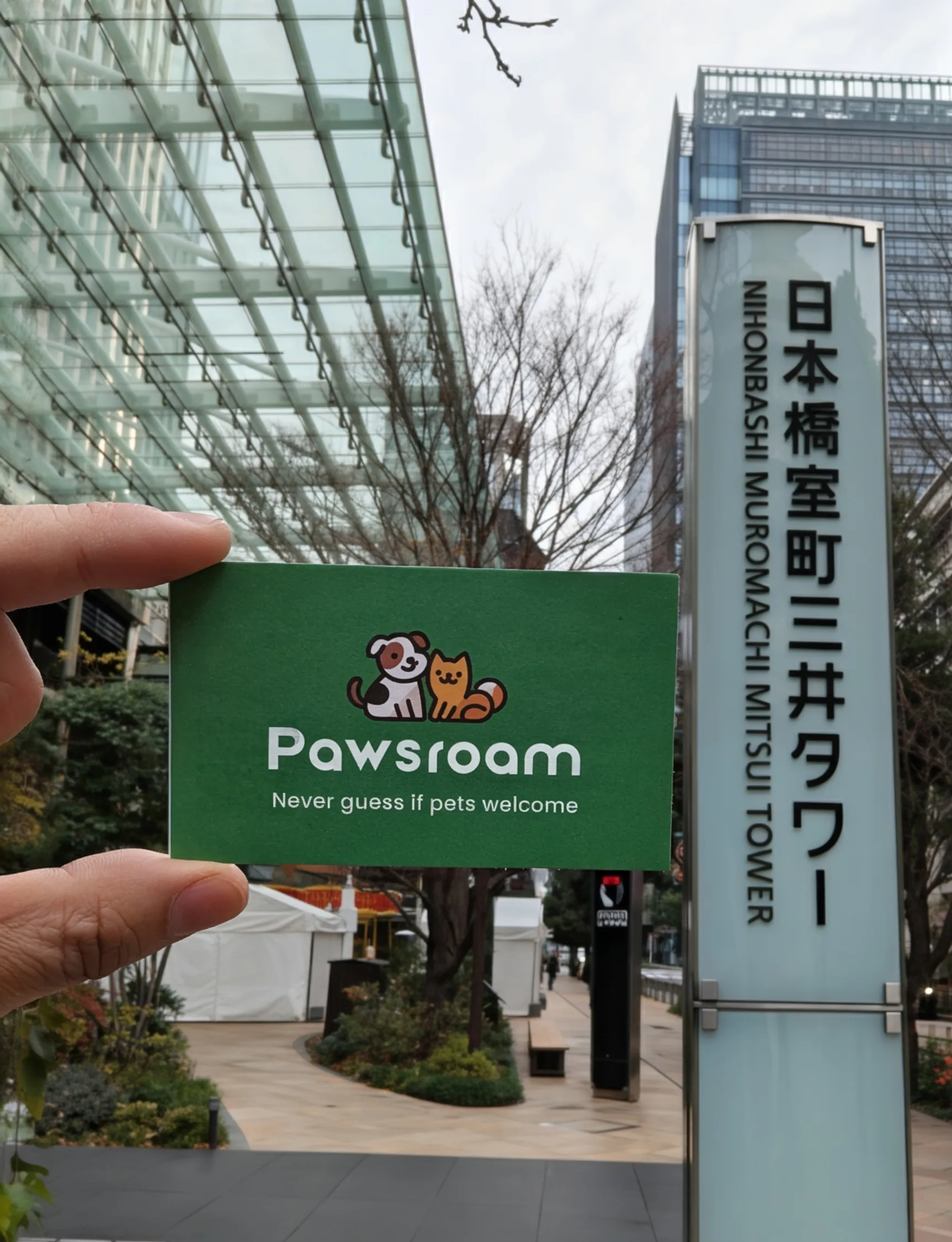
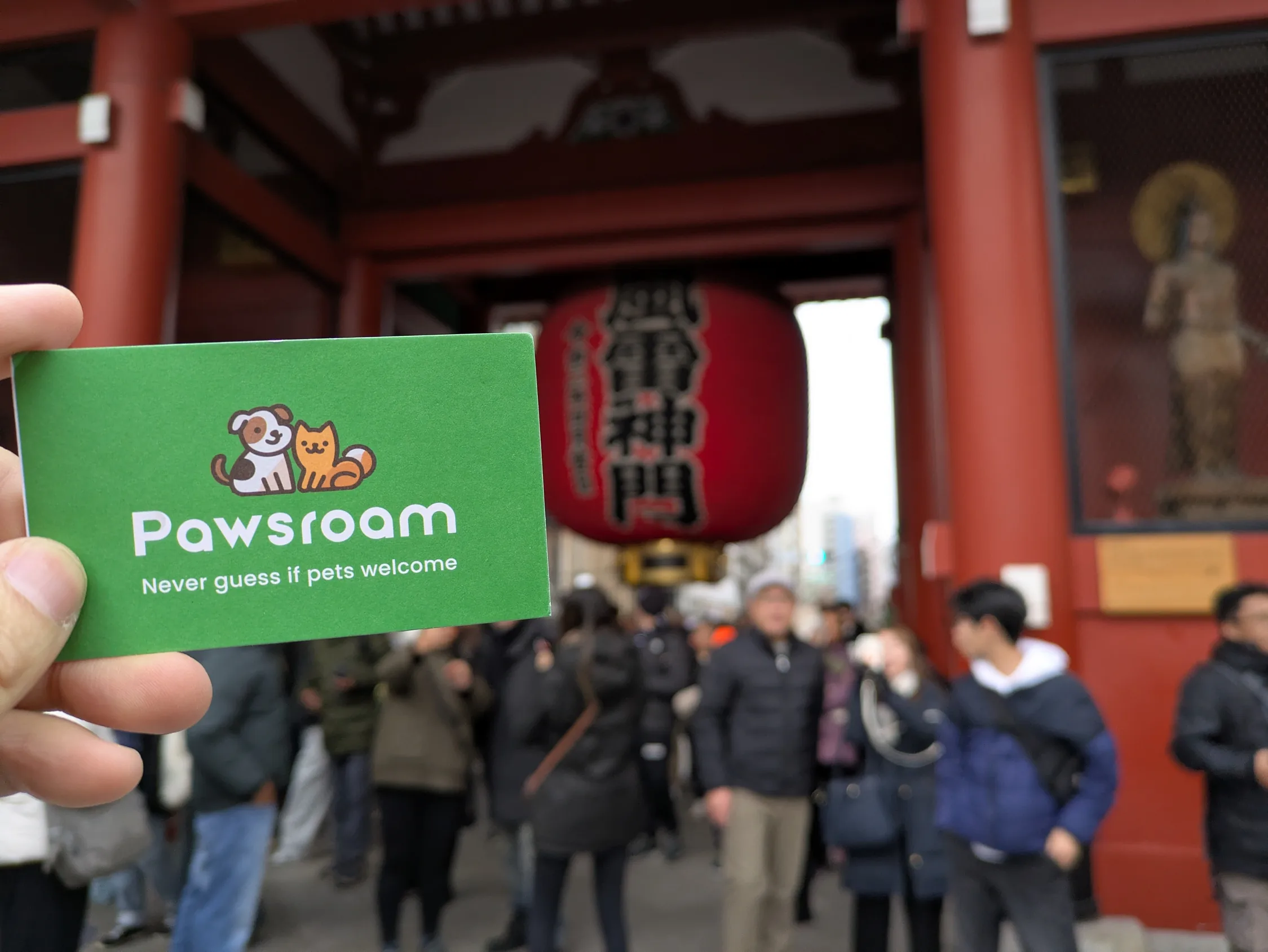
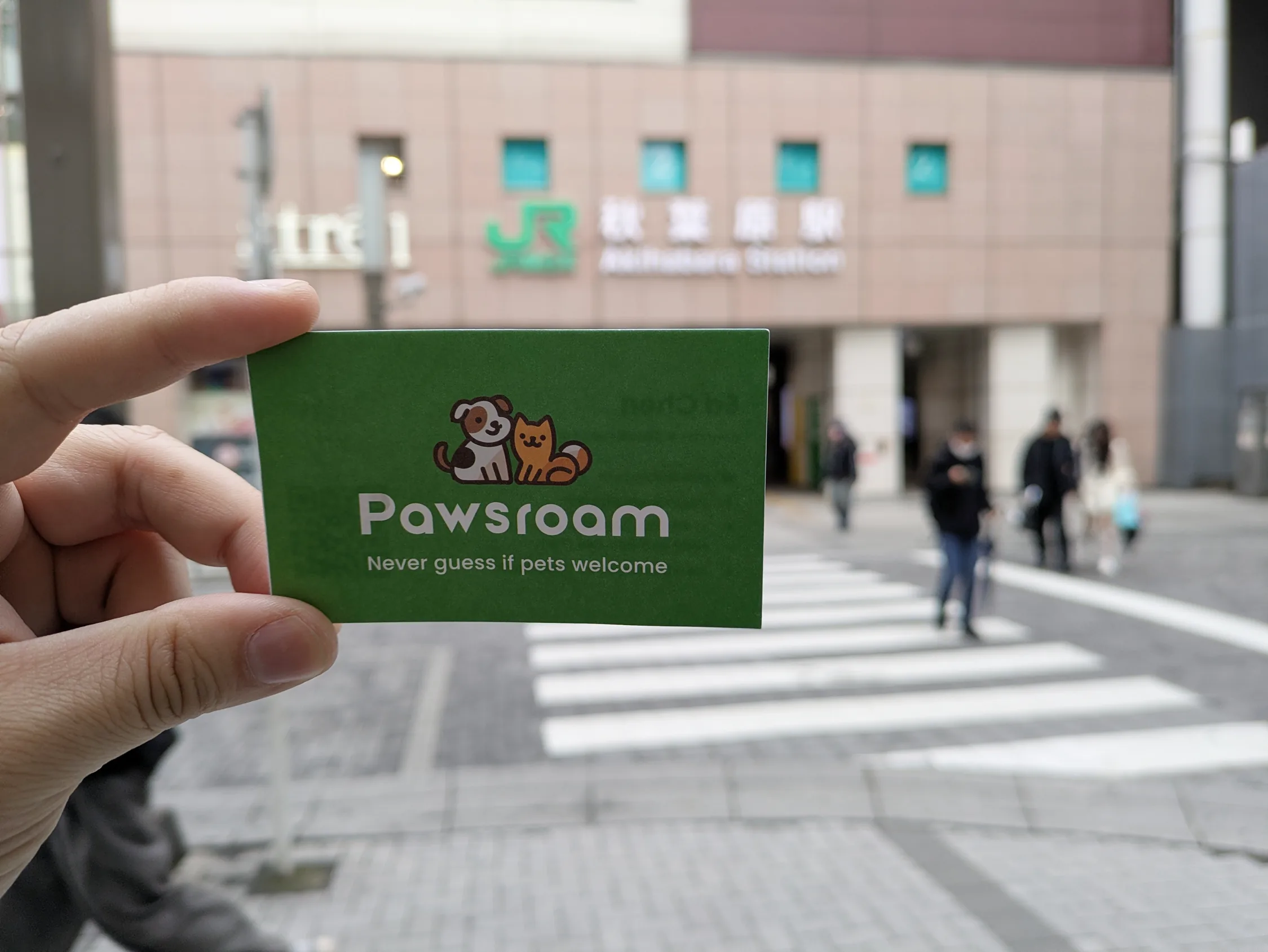
Pet cafés · veterinary clinics · parks · sitter communities — Tokyo, 2024–2025.
How it earns,
and where it lands first.
Service commissions
15–20% on PawsSafe emergency sitter bookings and temporary boarding. A flat fee on specialized care matching.
B2B affiliate & insights
PawsCoupon listing fees for high-visibility promotion. Aggregated, anonymized behavior data for pet brands and retailers.
B2C premium
Priority SOS matching for emergencies, and early access to PawStar-verified bookings — the consumer subscription tier.
Validate the core
Single city, map-only. No B2B portal yet. Prove that owners use geo-based discovery under real conditions.
Open the supply side
Self-serve business portal — added only after consumer trust signals confirm demand. Sequence over speed.
Scale the infrastructure
Multi-region admin and analytics for operations. Scope expands with validated evidence, not projected optimism.
Compliance,
built in from day one.
A platform handling personal data, youth users, and in-app communication in Japan carries real regulatory weight. I designed for it during the design phase — not as a bolt-on — so the architecture is defensible from the start.
Explicit consent at registration, granular privacy controls, automated export on request, and a 30-day retention policy with automated purging.
End-to-end encryption for owner–sitter messaging, no third-party access to message content, and a documented 24-hour breach-notification playbook.
Birthdate verification, automatic content filtering for under-18 accounts, and a parental oversight dashboard for booking history.
RBAC across sitter / user / admin roles, audit logging on sensitive operations, documented DR — readiness for certification, not a certified claim.
Idea to live, in seven months.
At zero infrastructure cost.
Metrics are MVP-stage and honestly framed: 200MB is asset-delivery data transfer (not a user count); user growth is tracked separately via Firebase Auth.
Designed, coded, and shipped solo.
Seven months, one person — Figma to React Native to a live Firebase deployment, with the admin tooling that runs the marketplace behind the scenes. The whole stack, end to end.
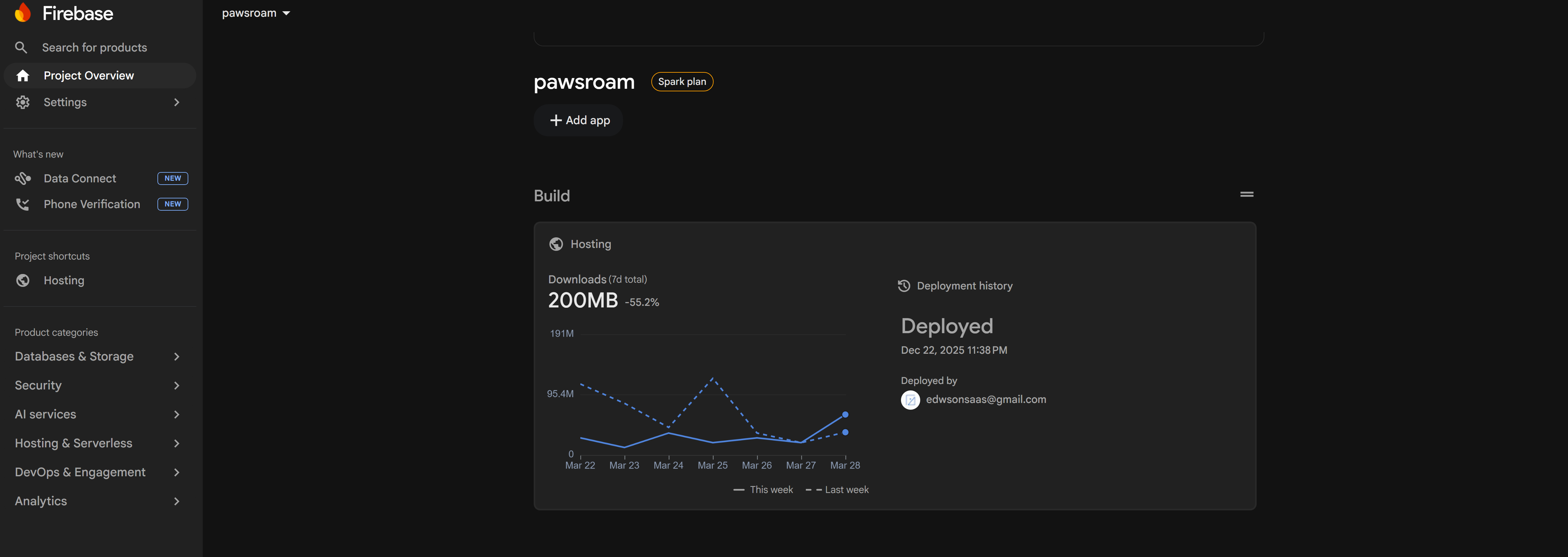
Firebase console — the live deployment. Shipped Dec 22, 2025 · $0 infrastructure on the Spark plan.
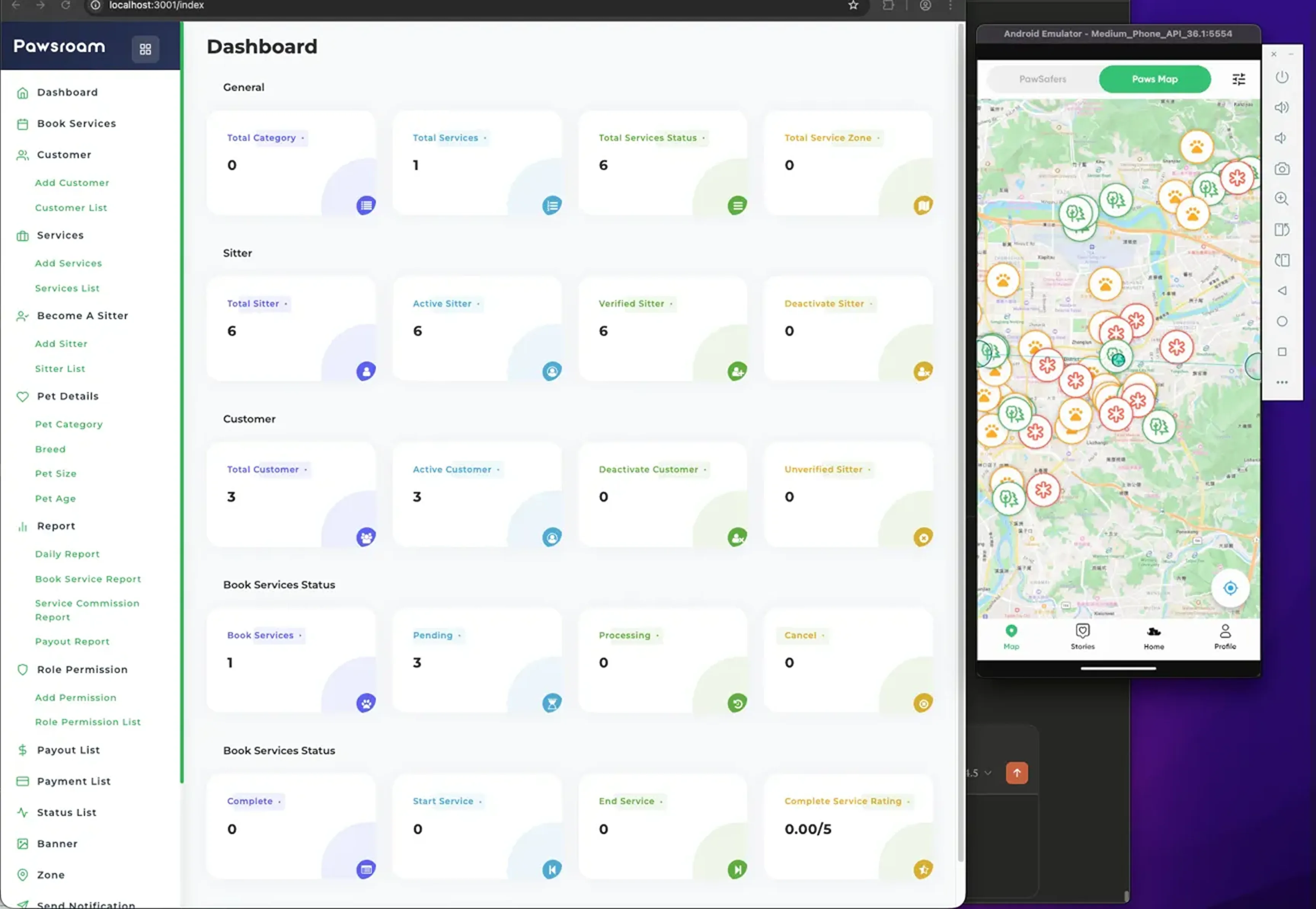
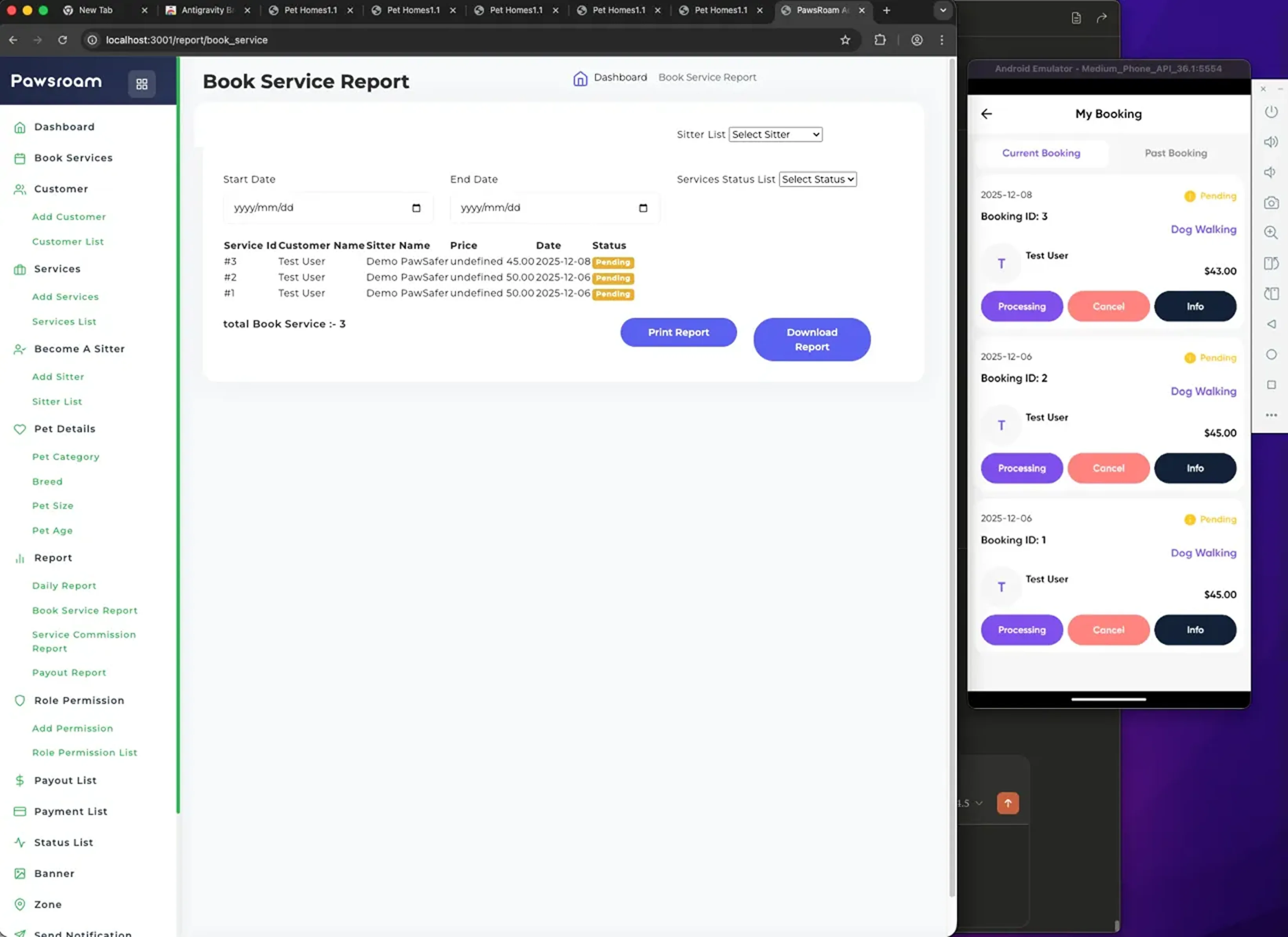
The B2B side — admin tooling for venue verification, sitter vetting, and marketplace operations.
Kansai market entry — a live MVP, not a pitch deck.
The product is the proof: a shipped Fukuoka-first marketplace, now moving toward Kansai. Traction on this page is MVP-stage (seven months, three languages, Spark-plan infra) — not ROI or retention figures.
- Milestone Osaka, 4 Dec 2026 · Kansai market entry
- On the table 10+ warm intros to Japanese operators · 3 institutional pet-industry partners
- Status Live MVP · shipped Dec 2025